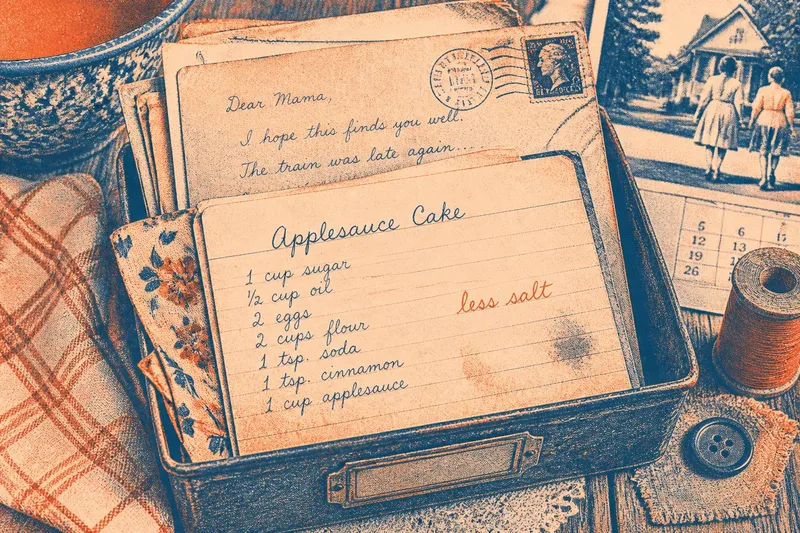
A Keepsake Box or a Memory List?
A keepsake box or memory list preserves different parts of a personal story. Choose what to keep, record the context, and make both easier to revisit.
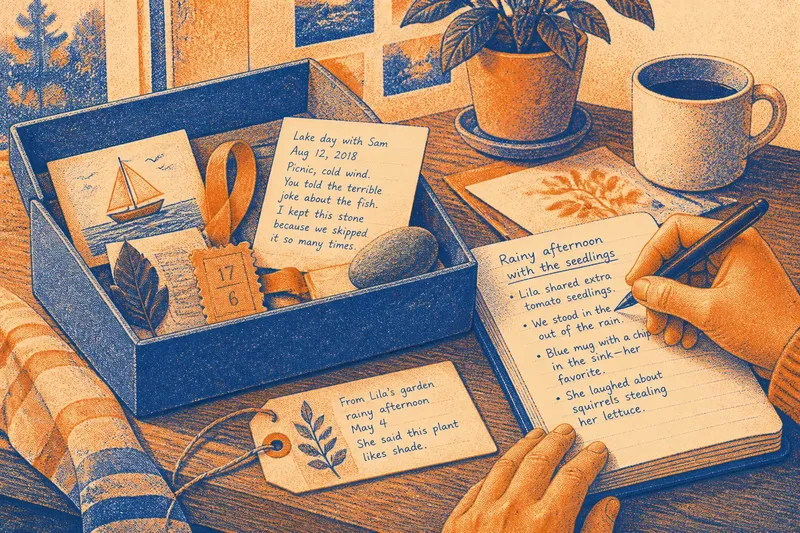
A ticket stub slides from an old book, but you can’t remember who handed it to you. That small gap is where the choice between a keepsake box or a memory list becomes useful: an object can preserve its texture and appearance, while a few written lines can preserve the people, circumstances, and meaning that an object cannot explain by itself.
Neither method captures a whole memory. The practical question is what you want to be able to recover later, and what tends to go missing from the way you save things now. Treat the following problems in order, beginning with the easiest one to overlook.
Objects without context
A physical keepsake gives a memory a tangible point of contact. You can turn over a postcard, notice a crease in a paper wristband, or hold a smooth stone collected on a family walk. Its material qualities may bring back details that a short note would not preserve: color, weight, handwriting, or the way an object was worn.
But an object rarely explains itself. A folded program might belong to a school performance, a neighborhood concert, or a friend’s farewell. Without a name or a small account of the occasion, someone looking through the box later may know what the thing is but not why it mattered.
The usual cause is assuming that the object will act as its own caption. Instead, add a short note with the date or approximate period, the people involved, and the reason you kept it. Write on a separate acid-free card if marking the item could damage it. Keep the note beside the object, not in a different file that must be searched separately.
Say you keep a paper menu from an invented family celebration. A card tucked beside it could say that your cousin chose the place, that the group shared a dessert, and that the menu came home because everyone signed its blank back. The expected result is that the object remains recognizable as part of a particular gathering, rather than becoming an unexplained scrap.
For a keepsake box, pair every item with enough context to identify its story.
Lists without texture
A memory list is a set of brief written descriptions, not a list of objects you own. It can hold what a keepsake cannot: a joke that was told, the order in which a small event unfolded, or the reason you left something behind. It also takes little storage space and can gather memories from moments that produced no physical souvenir.
Its weakness is abstraction. A line such as “good day at the lake” gives a future reader a mood but little to picture. Even a longer note may flatten the scene if it records only the main event and leaves out the objects, gestures, and surroundings that made it specific.
When a list feels thin, the cause is often writing at the level of a verdict: wonderful, awkward, important. Try adding one observable detail and one relationship. Note the chipped blue cup beside the sink, then say who kept reaching for it or what it was used for. You need not turn the entry into a polished story; the details simply give the memory a more distinct outline.
Keep the entry brief enough that you can add it without turning memory-keeping into an assignment. A few plain sentences can record where you were, who else was there, and what detail you would otherwise lose. If you are unsure what to include, write the part that would be hardest to explain to someone who was not present.
Choosing what to preserve
Some memories suit an object; others suit a note. A keepsake is especially helpful when its physical form carries meaning: a child’s uneven drawing, a handwritten recipe card, or a ribbon worn at a gathering. A written description is often more useful when the central part of the memory was a conversation, a passing kindness, or a place you cannot bring home.
There is no need to force a choice for every occasion. A small object and a brief note can do different jobs: one gives the memory a material trace, the other supplies the surrounding circumstances. But keeping both is not automatically better. If an item has no lasting meaning for you, a written account may be enough; if a note would only duplicate what the object already makes clear, keep the object with a minimal identifying caption.
Imagine an invented situation in which you find a paper label from a neighbor’s plant. You could keep the label if its handwriting or worn edge matters, and write a sentence about the neighbor sharing seedlings on a rainy afternoon. If the paper itself feels ordinary, you could record the exchange in a memory list and let the label go. In either case, the expected result is a record of the gesture rather than a pile of materials with no explanation.
When should you keep the object?
What makes a keepsake worth storing?
Keep an object when its appearance, material, or personal association contributes something a description would not. Ask whether you can name the memory it connects to and whether you would want to encounter it again.
Can a written list replace a keepsake?
Sometimes, particularly when the memory depends on an exchange or a setting rather than on the object’s physical qualities. A clear note can preserve who was present and why the moment mattered, even when there is nothing worth saving in a drawer.
How much should a memory list include?
Write enough to identify the occasion and preserve a detail that would otherwise fade from the account. A few concrete sentences are often more useful than a long entry that circles around a general feeling.
What if I cannot remember the whole story?
Record what you do remember and mark uncertainty plainly, such as “possibly the spring visit” or “I think Mara gave this to me.” A modest note is more honest and useful than filling a gap with a confident guess.
When the collection grows
A box can become difficult to use when it holds every receipt, wrapper, and note that once seemed meaningful. The cause is often a decision postponed at the moment of saving. Before adding an item, name the memory it represents; if you cannot, set it aside until you can decide whether a written description would be more useful.
A memory list can become just as hard to revisit if every entry is buried in one long document. Give entries clear titles, such as “Rainy afternoon with the seedlings,” and group them in a notebook or digital document by year, person, or place. Choose a simple structure you are likely to keep using; elaborate filing is not needed for a small personal archive.
For physical objects, store paper and fabric away from damp areas and direct sunlight, and avoid crowding delicate items. For digital notes, keep a copy in a place you can locate and open. The right handling depends on the material and, for valuable or fragile items, the maker’s instructions or advice from a qualified conservator.
Making the record revisitable
The best record is not necessarily the fullest one. It is the one that lets you recognize the memory without asking the object to explain itself or expecting a few lines to reproduce every sensation. A keepsake box or memory list works well when each is asked to preserve what it can actually carry.
When you next come across something you might save, pause long enough to ask what would be lost if it disappeared. If the answer is its handwriting, shape, or worn surface, keep the object and add a caption. If the answer is a person’s words or the circumstances around the moment, write those down while they are still clear. That small decision gives the memory a form you can return to—and a reason you will recognize it when you do.